A business can have a good website, active campaigns and useful software while still struggling to grow. Each part may work on its own. The problem is often the relationship between them: the offer attracts one audience, the campaign promises something else, and the team follows up without the context that created the enquiry.
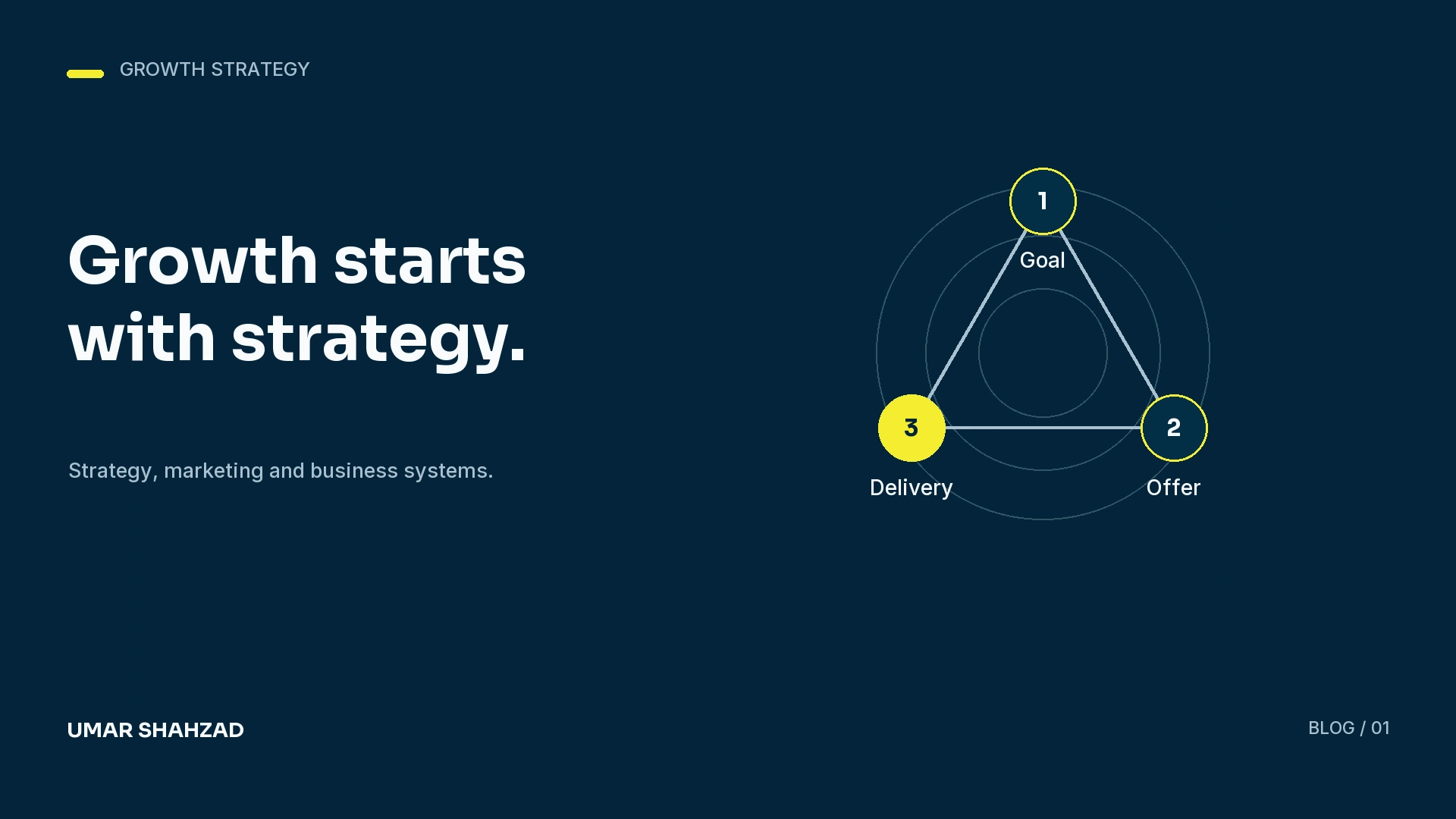
I approach growth through three connected layers: strategy, the growth engine and the operating system. This makes the work easier to prioritise because every change has a business purpose, a customer journey and an owner.
Start with a business decision
“We need more traffic” is a channel request. It does not explain which customers the business wants, which service it should sell or how much additional demand the team can handle. Before choosing tactics, establish the commercial objective and the constraint holding it back.
For a service business, that might mean increasing suitable consultation requests, entering a new market or reducing the time between an enquiry and a proposal. These are different objectives. They need different offers, messages and operating arrangements.
- Define the customer and the situation that creates demand.
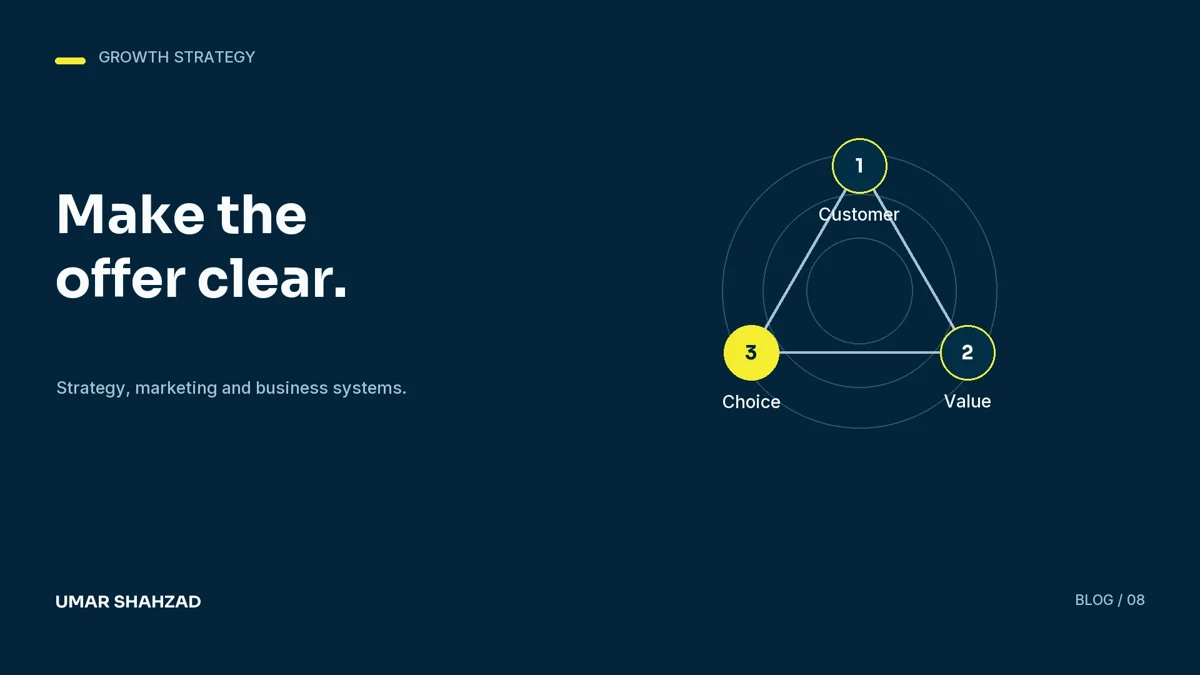
- Identify the offer, its value and the reasons someone would choose it.
- Agree how the business will recognise a valuable enquiry.
- Check capacity, delivery requirements and the follow-up process.
Give each channel a role
The growth engine turns strategy into customer-facing activity. Search can capture an existing need. Content can explain a difficult decision. Paid social can introduce a product people do not yet know. A website should help the visitor understand the offer and take the appropriate next step.
These roles should be explicit. Otherwise, a team may judge an educational campaign by immediate sales or increase search spend before fixing an unclear service page. A channel plan should state the audience, message, destination, primary action and business outcome for each activity.
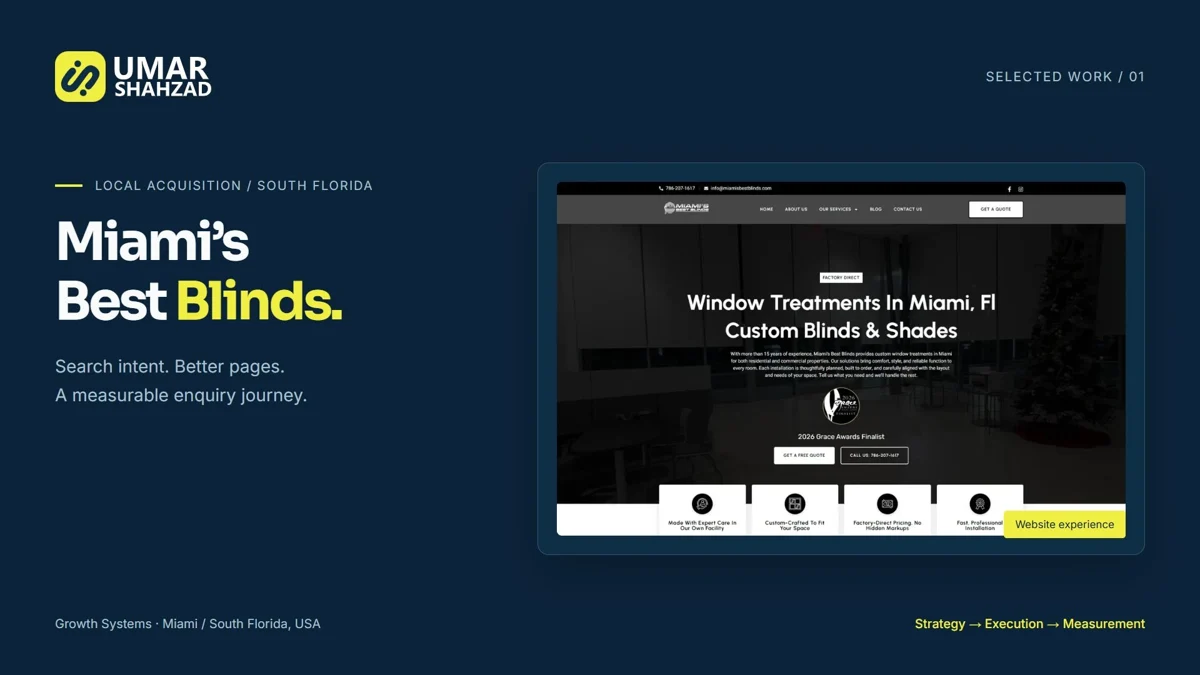
The Smart Tint Solutions project shows this distinction: search addressed existing intent, while visual campaigns demonstrated the product and reached new audiences. A construction-focused offer needed its own message and enquiry path.
Connect the enquiry to the operation
Growth continues after a form submission. Someone must receive the enquiry, understand the requirement, respond, qualify it and record the outcome. If those steps are unreliable, better acquisition can simply create a larger queue of unanswered opportunities.
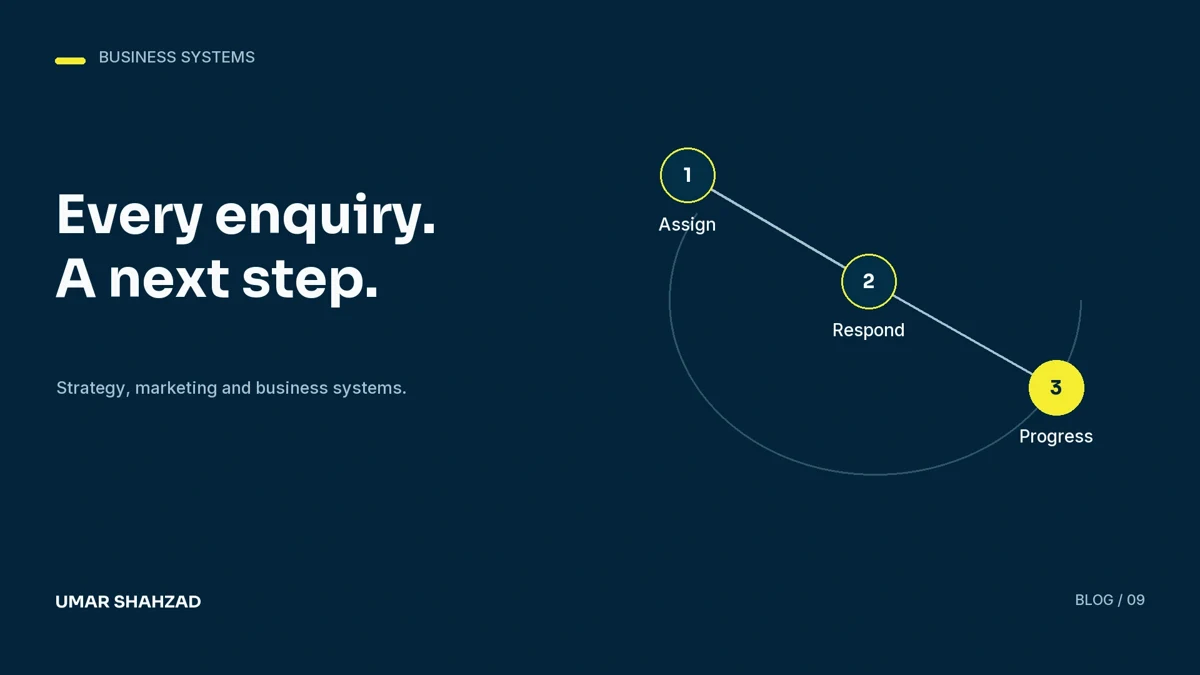
Map the handoff into the CRM or team workflow. Specify who owns the first response, what information they need and what happens if the enquiry is incomplete. Review the process with the people doing the work; a diagram is only useful if the team can follow it.
Find the constraint before planning the next quarter
A practical review moves through four questions. Are the right people arriving? Do they understand the offer? Can they take the next step? Does the business handle that response effectively? Evidence from each stage narrows the next priority.
If relevant visitors leave without enquiring, review the page and offer before purchasing more traffic. If enquiries arrive but few are suitable, examine targeting and qualification. If suitable leads wait too long for a response, fix ownership and capacity before increasing demand.
Build a short, accountable growth plan
Choose a small set of changes with a clear owner, completion date and measurement. Record the starting position and explain what result would justify continuing, adjusting or stopping the work. This creates a plan the team can use in weekly decisions.
The objective is a business that understands how growth happens and can improve the weakest part deliberately. For the measurement layer, read why campaign reports and CRM counts disagree. To discuss your priorities, work with me.