A campaign can generate relevant enquiries while the business struggles to turn them into opportunities. Before changing the acquisition plan, I want to understand what happens after someone responds: who receives the enquiry, how it is handled and what the business learns from the outcome. These marketing operations problems need clear ownership and follow-through.
That is the operating-system layer of growth. People, process, management, reporting and tools determine whether demand receives a consistent response. The marketing and operational questions need to be examined together.
Follow one enquiry through the business
Choose a recent enquiry that the team can review appropriately. Trace its route from the first recorded contact to its current status. Check assignment, response, qualification, next action and final outcome.
The purpose is to understand the process rather than attribute blame. Compare what the workflow says should happen with what the people doing the work actually need. A missing step, unclear responsibility or inaccessible piece of information is something the business can address.
Distinguish the symptom from the decision
Few suitable enquiries may point to targeting, positioning, the offer or qualification. Suitable enquiries left unanswered point to assignment, availability and escalation. Proposals that stall require a review of fit, expectations and the sales process.
A dashboard that reports activity without helping anyone decide creates a reporting problem. A team unable to meet the promise made in marketing creates a capacity or delivery problem. Each deserves a different next action.
Four handoffs to inspect
- Marketing to enquiry: does the message attract the intended customer and set the right expectation?
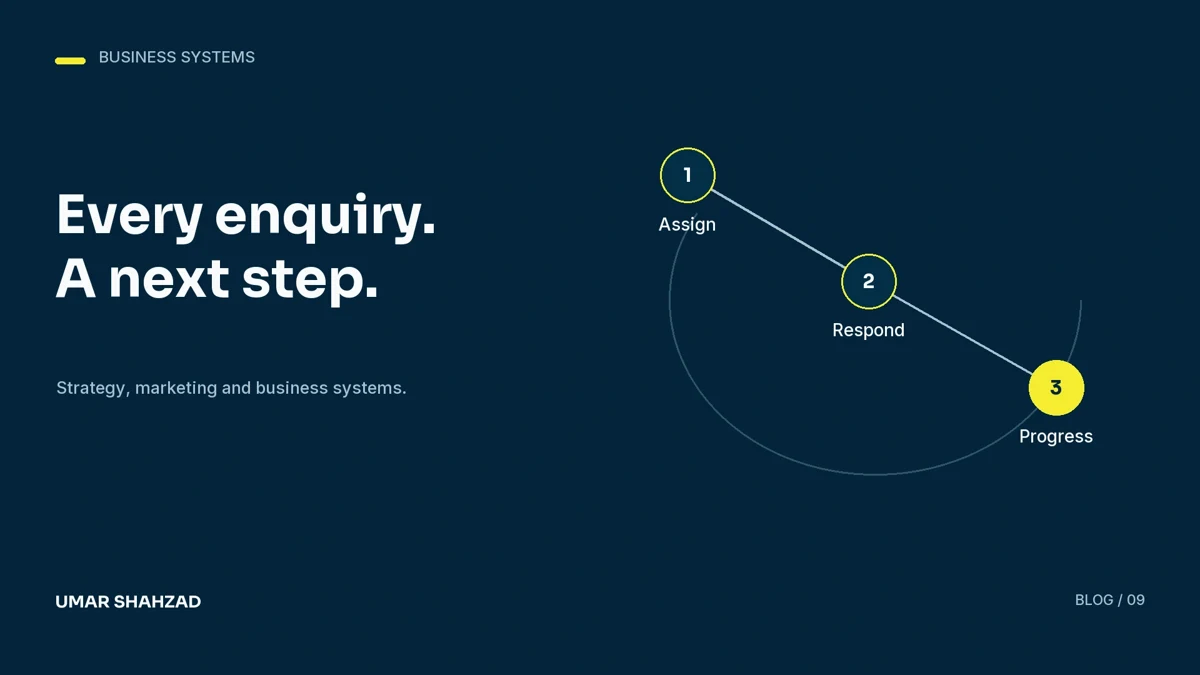
- Enquiry to owner: does every genuine request reach someone with responsibility to respond?
- Owner to next action: is the customer qualified, informed and given a clear next step?
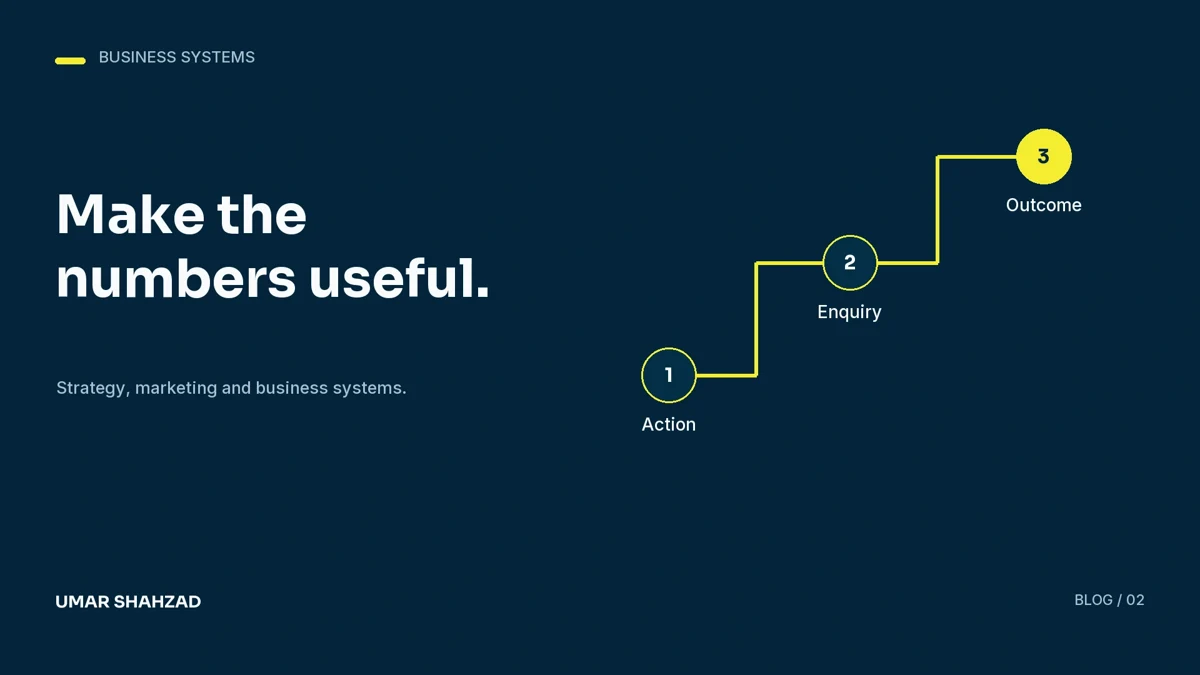
- Outcome to management: can the business see what progressed, what was lost and what should change?
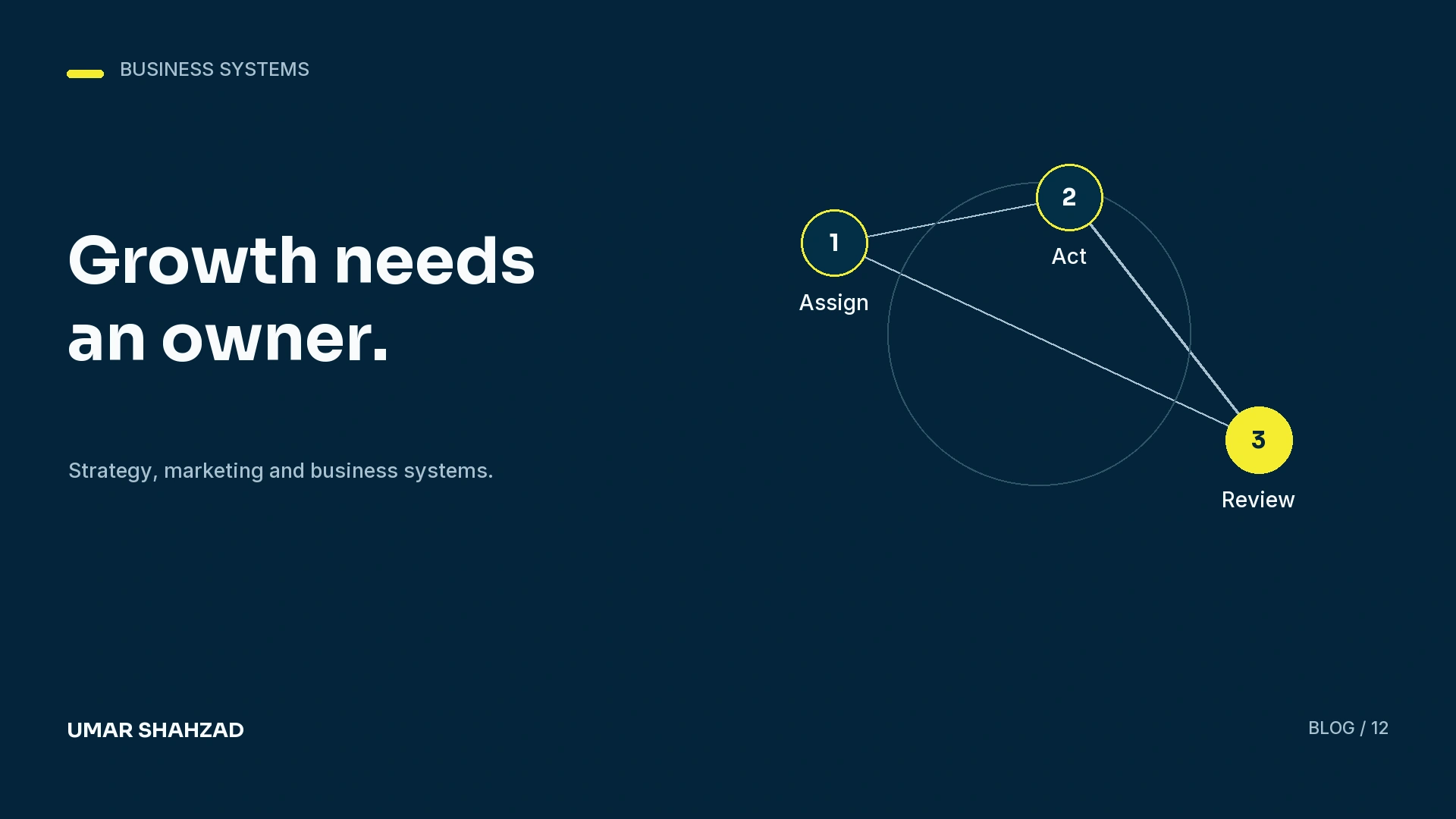
For each handoff, define the owner, information required, normal next action and exception route. The agreement should be clear enough that another team member can use it without guessing.
Keep CRM status useful
An enquiry record should help the team understand the situation. Its status needs to describe what has happened, while its next action states what someone must do. Those are separate fields with separate purposes.
Agree on the meaning of qualification, the reasons for closing a lead and the person responsible for updating the record. Review incomplete records with the team. More software does not resolve a disagreement about how the work should be done.
The practical steps are covered in Build a Lead Follow-Up Process Your Team Can Actually Use. For the relationship between campaign totals and business outcomes, read the tracking diagnostic.
Improve the process before automating it
Once the handoff is understood, automation can help with routing, reminders, information transfer and routine reporting. Start with a defined task and an exception path. Someone should remain responsible for checking that it works and handling cases the workflow cannot resolve.
AI assistance requires the same clarity. Establish the inputs, expected output and review standard before relying on it inside a customer-facing or management process.
Scale against the business's ability to respond
Before increasing demand, check the people and capacity available to handle it. Review the enquiry queue, unfinished actions, response process and delivery commitments. Agree how the team will recognise that capacity is becoming a constraint.
My diagnostic ends with a practical decision: what needs to change in marketing, what needs to change internally and who owns each action. If your campaigns and business outcomes tell different stories, Work With Me to examine the full journey.