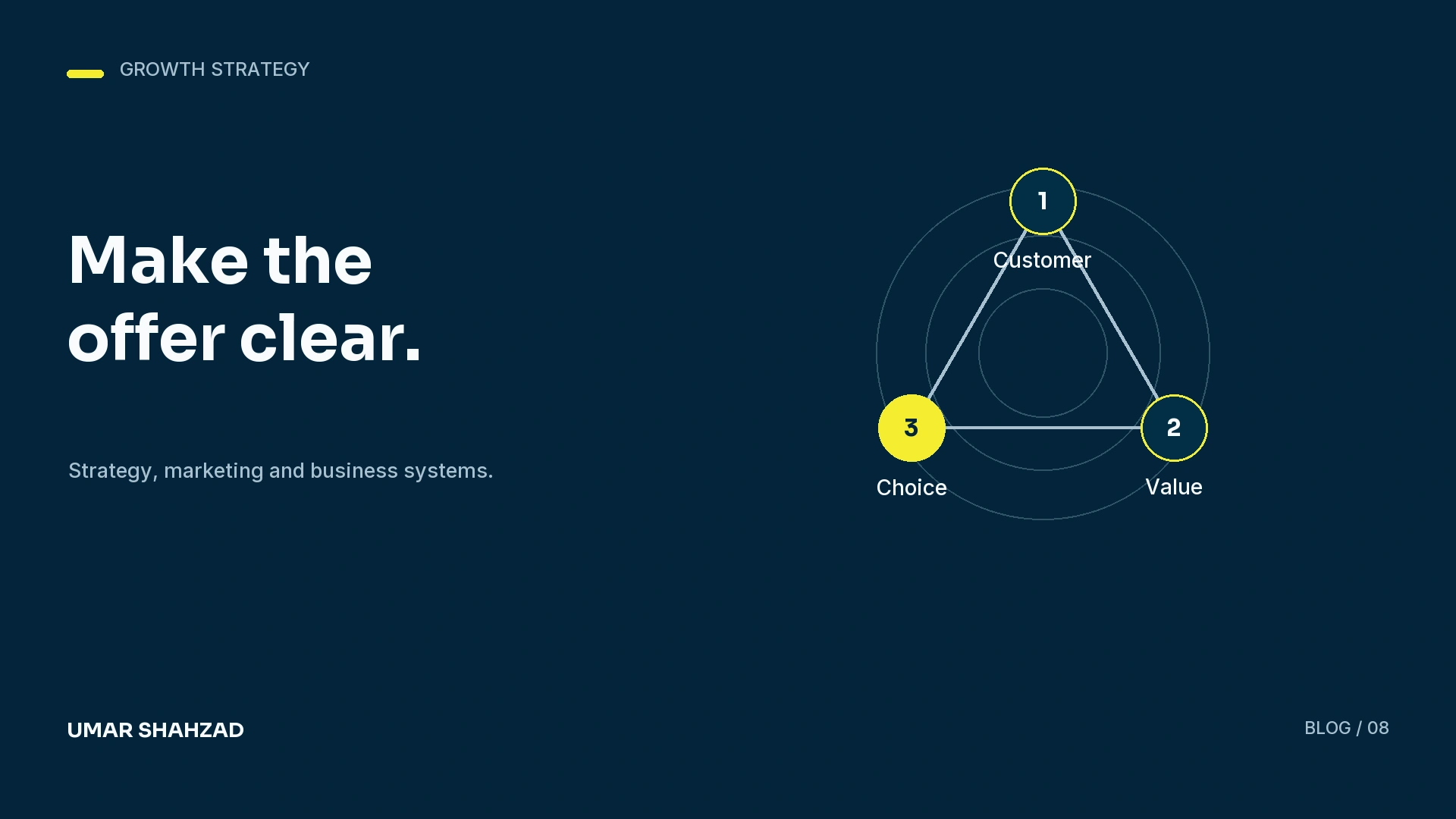
More marketing does not automatically solve an offer that is difficult to understand. A campaign can bring relevant people to the website while the page leaves them uncertain about the service, its value or why this business is the right choice.
Before increasing spend, review what the customer is being asked to choose. A clearer offer gives the campaign a more specific message and gives the delivery team a better starting point for the conversation.
Define the customer’s situation
Describe the customer in terms of a problem, requirement or moment of change. A broad demographic can be useful for planning, but it does not explain why someone needs the service now. Look at recent enquiries, sales conversations and the questions customers ask before buying.
Separate what customers say they want from the outcome they are trying to achieve. Someone requesting a new website may need a clearer service explanation, a better enquiry journey or a site their team can maintain. Those needs affect the scope and message.
State the offer without relying on adjectives
Explain the service, who it suits, what it includes and what happens next. Replace broad descriptions such as “innovative solutions” with information the customer can assess. Strong positioning gives a buyer a reason to choose; it should also help unsuitable prospects recognise a mismatch.
A useful offer statement includes the customer requirement, the work being delivered and the practical result the work is intended to support. Avoid promising a numerical outcome that depends on factors outside the service or is not supported by evidence.
Make scope and expectations clear
Ambiguity can create friction at both ends of the journey. Customers may hesitate because they do not understand what is included. The team may later spend time correcting expectations that the page allowed to form.
Describe the main deliverables, dependencies, typical process and any meaningful limits. If pricing requires discovery, explain what determines the scope and what the initial conversation will establish. This makes an enquiry feel purposeful.
Use proof matched to the offer
Choose project examples that demonstrate the relevant work. A landing-page project can show how service selection, trust and forms were designed. A campaign case can show its reporting period, tracked actions and spend. Do not force every example into a revenue claim.
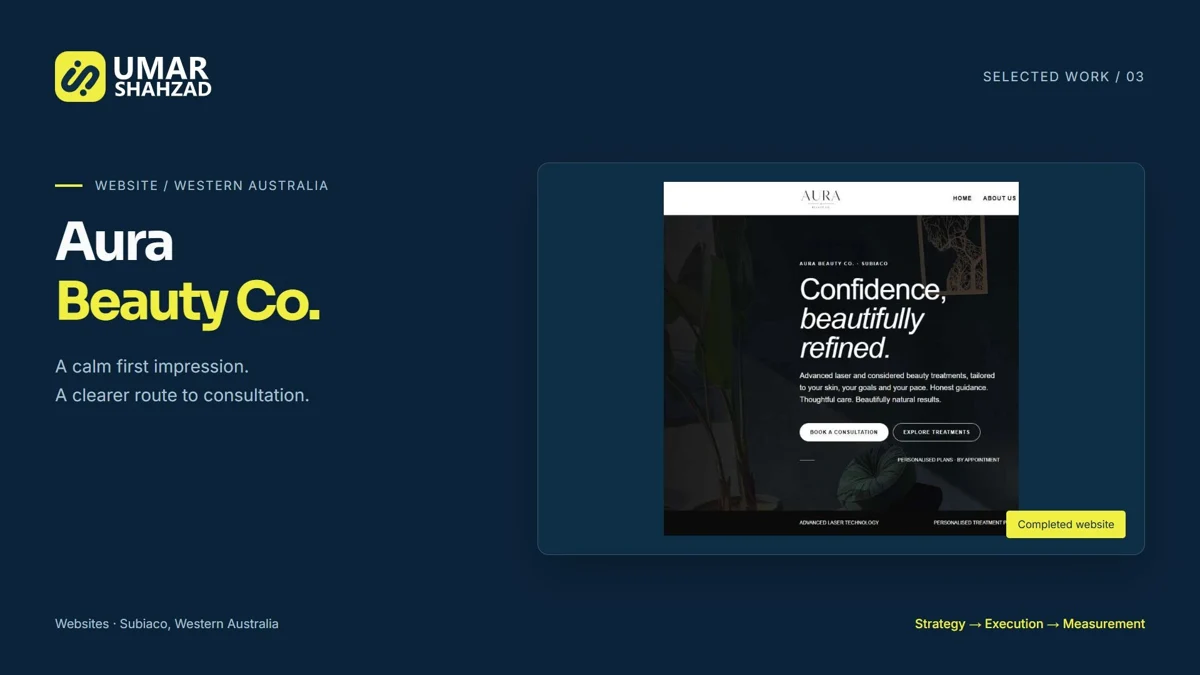
The Aura Beauty Co website project demonstrates treatment-led structure and a consultation journey. The Capital Closure project shows website strategy and connected acquisition for a new professional-services business.
Test the message in actual conversations
Ask a small number of relevant customers to explain the offer back in their own words. Listen for what they believe is included, who it is for and what they expect after contact. Repeated misunderstandings provide a concrete copy priority.
Review the quality of incoming enquiries after making the change. A clearer offer may reduce unsuitable volume while improving the relevance of conversations. Measure both rather than judging the revision only by the number of forms submitted.
Connect the offer to the campaign and operation
Use the same service definition in advertising, the page and the first response. The team should be able to deliver the promise the marketing creates. When that relationship is clear, additional investment has a more dependable foundation.
Continue with the service landing-page structure or the wider growth strategy framework.