AI can help a team organise information, prepare first drafts and reduce repetitive administration. Its usefulness depends on the task, the quality of the inputs and the effort required to review the output. A workflow that generates more material but creates a longer approval queue has not improved the operation.
My starting point is the recurring task the team wants to improve. The tool comes after the process is understood.
Choose a task with a clear finish
Suitable starting points include grouping anonymised customer objections, preparing a structured meeting summary, checking a brief for missing information or drafting campaign variants against an approved offer. Each has a recognisable input and an output a responsible person can assess.
A broad instruction such as “improve our marketing” leaves too many decisions unresolved. A more useful brief specifies the audience, task, available information, required format, restrictions and review standard. Define what the workflow should do when important information is missing.
Keep business judgment with the owner
AI can suggest patterns in customer interviews, but someone must check whether those patterns reflect the market. It can draft an advertisement, but the offer, claim and commercial decision still need an accountable owner. It can summarise performance, but a person must check the dates, definitions and comparison.
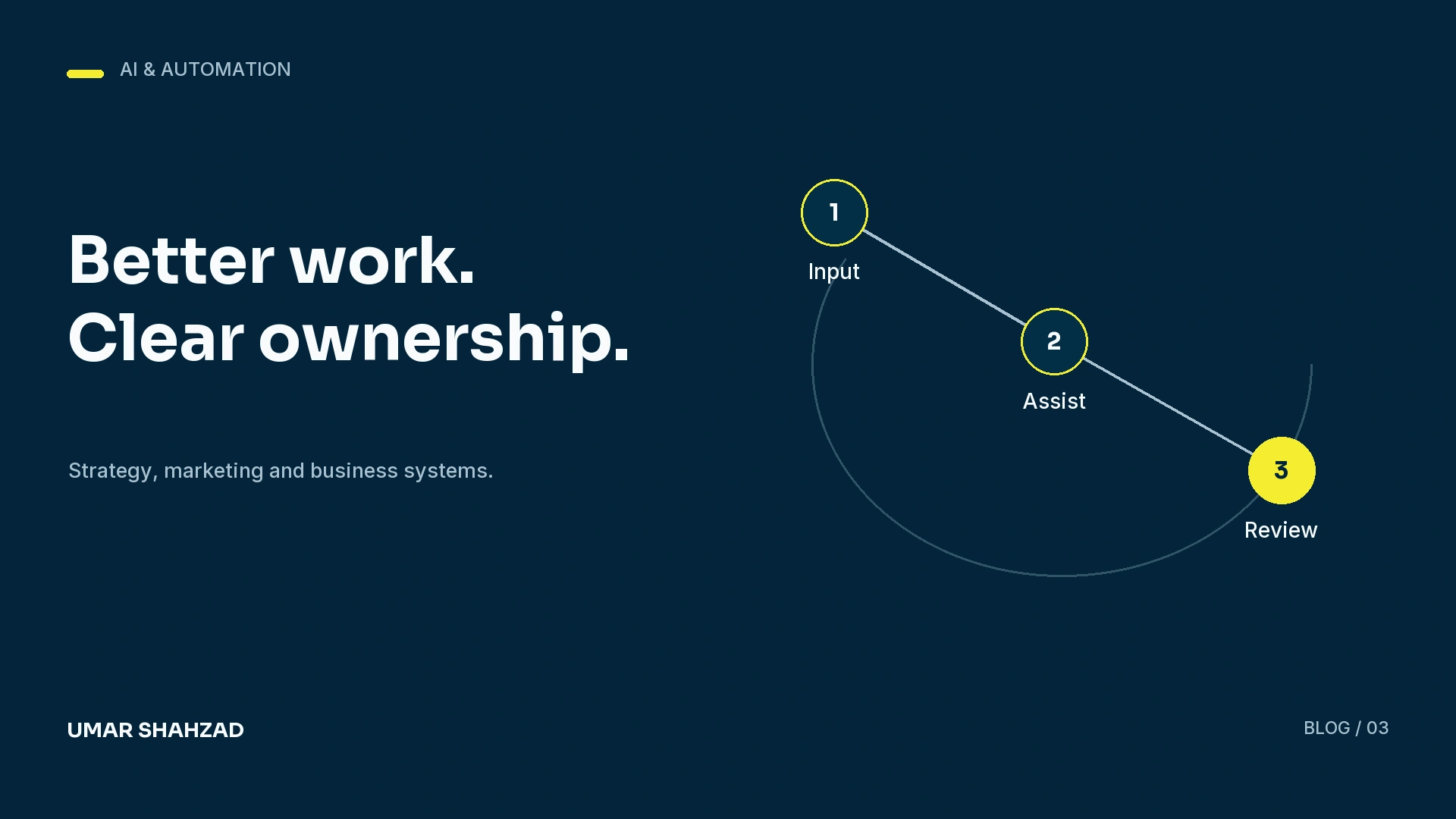
Separate assistance from approval. The team should know which outputs are internal drafts, which can be used after review and which actions always require a person. This is especially important for customer-facing messages and changes to business records.
Run a small pilot using real work
Choose a limited sample of routine tasks. Record the current time spent, the common errors and the standard of the finished work. Then compare the assisted workflow using the same requirements. Include incomplete inputs and awkward cases, rather than testing only the easiest examples.
- Preparation time: how long the input takes to make usable.
- Review time: how much checking and correction the output needs.
- Rework: how often the task has to be repeated.
- Completion quality: whether the finished work meets the agreed standard.
Time saved in generation can be lost in preparation or review. Assess the whole task before expanding the workflow to the team.
Protect the information the workflow uses
Use approved tools and access arrangements. Remove personal or confidential information that is unnecessary for the task. Check the provider’s current data settings before using client material; settings and product terms vary between services and plans.
Keep the final business record in the system the team already uses. A summary that exists only in a chat window can be hard for colleagues to find, verify or update. Assign an owner for reviewing the workflow as tools and team requirements change.
Build a repeatable review standard
For a campaign draft, check message match, factual claims, tone, destination and required approvals. For a report, check dates, calculations and whether the explanation follows from the numbers. A checklist makes review more consistent without pretending every task is identical.
NIST’s AI Risk Management Framework provides a broader reference for assessing and managing AI risks. For day-to-day work, start with clear ownership and a workflow you can inspect.
AI belongs inside a functioning operation. Read how to structure lead follow-up for an example of the process decisions that should be settled before automation.