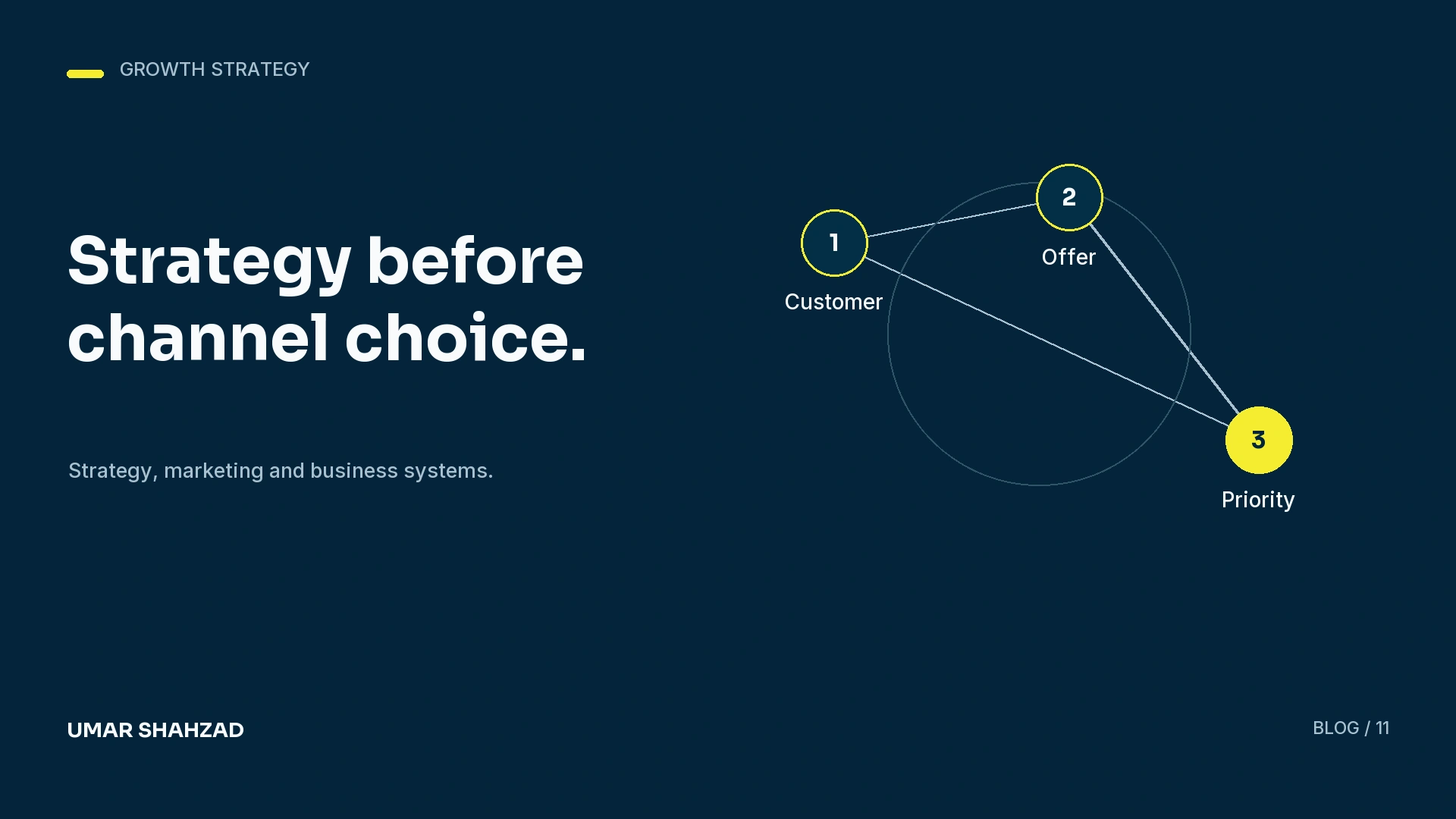
When a business asks whether it needs Google Ads, SEO, paid social or a new website, I first look at the decision behind that request. A channel can support a growth strategy, but choosing one does not establish the customer, offer, commercial objective or priority.
My starting point is a short diagnostic. Its purpose is to produce a brief that the business and delivery team can use: what we want to achieve, who we need to reach, what we are offering and what currently prevents progress.
1. Make the objective specific
“More growth” leaves too many possible interpretations. The objective might be more suitable consultation requests, better conversion from enquiry to proposal, stronger demand for one service or entry into a particular market.
Write down the outcome and its business value. Then establish the starting position, who owns the decision and when progress will be reviewed. If the current data cannot support a reliable baseline, include that measurement work in the plan.
2. Understand the customer and the buying situation
Define the customer in terms of a real need. What has changed in their business or life? What alternatives are they considering? What makes the decision difficult? What do they need to believe before taking the next step?
Sales conversations, enquiry questions, customer feedback and research can help answer those questions. They inform both the offer and the marketing language. A broad demographic description alone rarely gives the team enough direction to build a useful customer journey.
3. Test the offer and positioning
The offer needs to explain who the service is for, what is included, why it matters and what happens next. The positioning should help a suitable customer understand why this business is a relevant choice.
Before increasing reach, inspect the promises in the advert, service page and sales response. They should describe the same offer. Read my service-business offer review for the questions I use to organise that work.
4. Locate the current constraint
Different constraints call for different investments. Limited relevant demand may require acquisition work. Visitors who cannot understand the service may need a clearer offer and page. Good enquiries without consistent follow-up need an operational response.
Use the evidence available at each stage. Avoid treating every low result as a traffic problem. Where the evidence is incomplete, define the smallest useful investigation before committing to a larger programme.
5. Check economics and delivery capacity
A marketing plan should account for how the business sells and delivers. Consider the value of a suitable customer, the cost of acquiring and serving them, the buying cycle and the capacity available to respond.
These factors affect the offer, the pace of acquisition and the amount of testing the business can support. They also help the team agree what a commercially useful result looks like.
6. Give each channel a defined job
Only then do I consider channel roles. Search can address an existing need. Content can explain a decision. Visual campaigns can introduce an unfamiliar product or service. The destination and next action need to match that role.
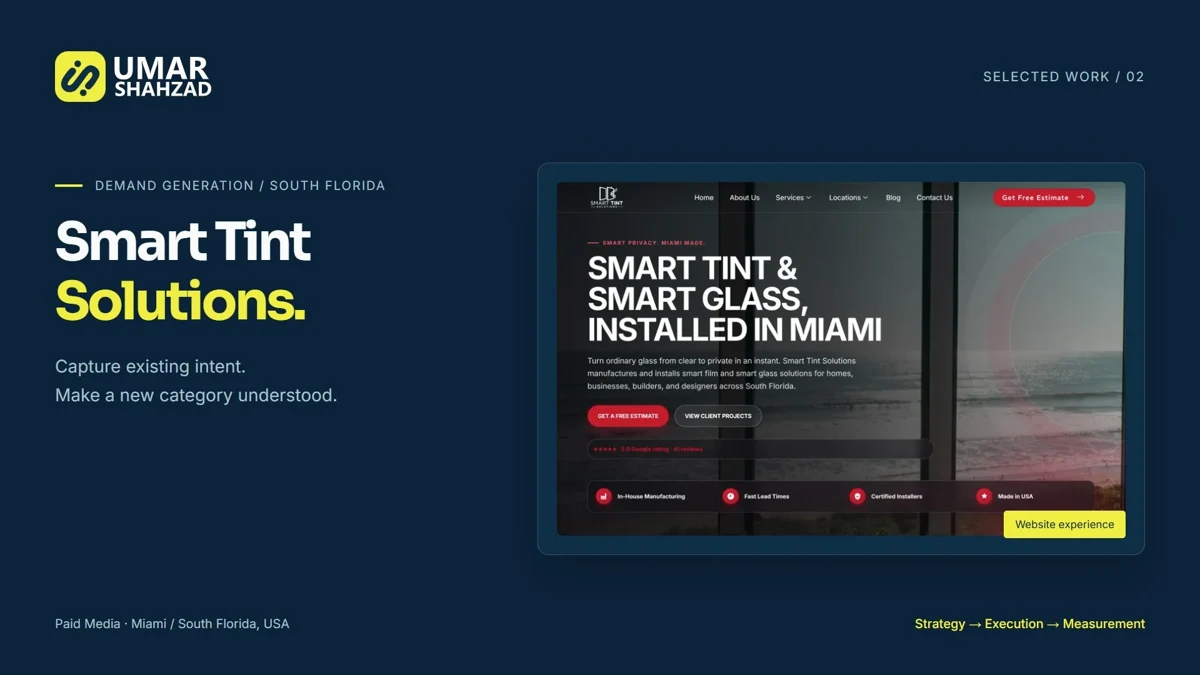
The Smart Tint Solutions case study provides a practical example of connecting search intent, visual product communication and the enquiry journey. The useful lesson is the relationship between those decisions.
Turn the diagnostic into a working brief
- Outcome: the commercial change we want to make.
- Customer: the need, buying situation and decision criteria.
- Offer: the service, value, proof and next step.
- Constraint: the current obstacle and supporting evidence.
- Execution: channel roles, customer journey and internal ownership.
- Review: baseline, decision date and conditions for adjustment.
That brief should guide the website, campaigns, measurement and internal handoffs. If your team is choosing tactics before agreeing on the business problem, Work With Me is the place to start that conversation.