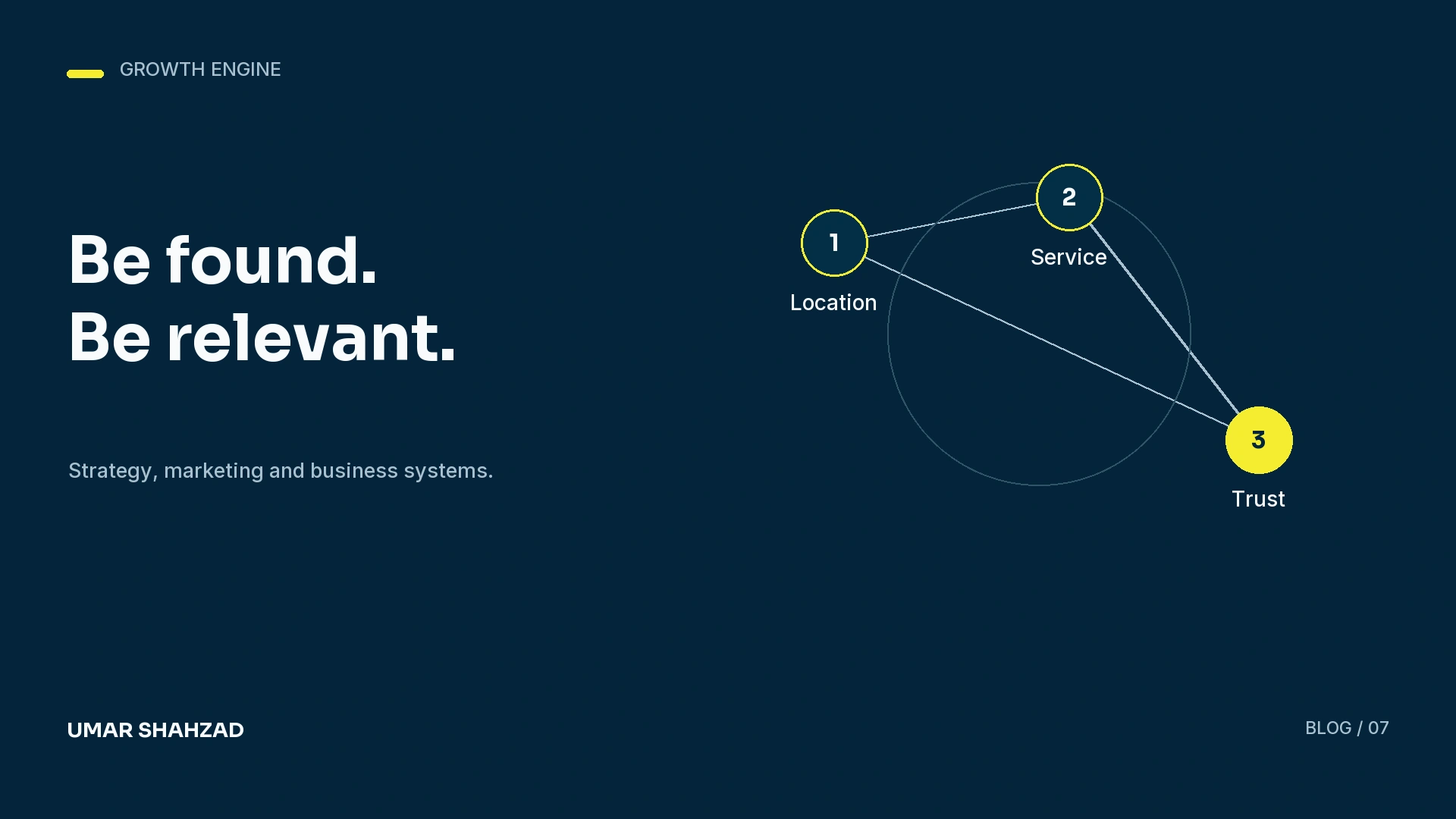
Local visibility depends on more than a well-filled profile. A customer needs to find the business, understand whether it serves their location and recognise why its service is relevant. The website, Business Profile and enquiry experience should give a consistent answer.
Start with the services and areas the business actually handles. This keeps the content useful and prevents expansion plans from turning into pages that make promises the operation cannot fulfil.
Establish accurate business information
Check the business name, contact details, opening hours, categories and service information in the Google Business Profile. Keep the website consistent with the current operation. Where a business serves customers at their locations, use the appropriate service-area arrangements rather than implying a storefront that does not exist.
Google’s local ranking guidance describes relevance, distance and popularity as the main factors. Complete information helps Google understand the business, but does not remove the effect of the searcher’s location or guarantee a position.
Build service pages around customer requirements
Give important services their own clear explanation where the offering warrants it. Describe the work, suitable customers, process, service area and next action. Add genuine project examples and relevant credentials rather than repeating the same generic paragraph across many pages.
For a window-treatment business, motorised shades and plantation shutters may involve different customer questions. For professional services, different audit requirements can need different explanations. The page structure should reflect those decisions.
Use location pages only when they add information
A location page should help someone assess the service in that area. Include real coverage details, relevant projects, logistical information or local requirements when available. Changing a city name in otherwise identical copy rarely improves the visitor’s understanding.
Do not create a location presence the business cannot support. A smaller set of useful pages is easier to maintain, review and connect to actual customer enquiries.
Earn and present customer trust
Ask for honest reviews through an appropriate process. Respond professionally and use feedback to identify service issues. Keep public testimonials attributable and permissioned, and avoid claims that the business cannot verify.
On the website, show work that demonstrates the service being discussed. The Miami’s Best Blinds project connected service-specific demand with relevant pages and a measurable enquiry path. That relationship matters after the customer discovers the business.
Measure visibility and enquiries separately
Review Search Console clicks, Business Profile interactions and completed website enquiries as separate indicators. Calls, direction requests and website clicks do not all represent the same customer action. Agree how the team will record the resulting conversations in the CRM.
Use consistent periods and note seasonal changes. A temporary increase in impressions may reflect wider exposure without a corresponding improvement in suitable enquiries. Look at the service pages and locations contributing to the change.
Maintain a monthly local review
- Confirm that business and service details are current.
- Check important pages and enquiry actions on mobile.
- Review recent customer questions and update missing information.
- Record visibility changes, suitable enquiries and the next improvement.
Local SEO works best when the business is accurately represented and the customer can act on what they find. For the technical foundation, read how to prioritise a technical SEO audit.