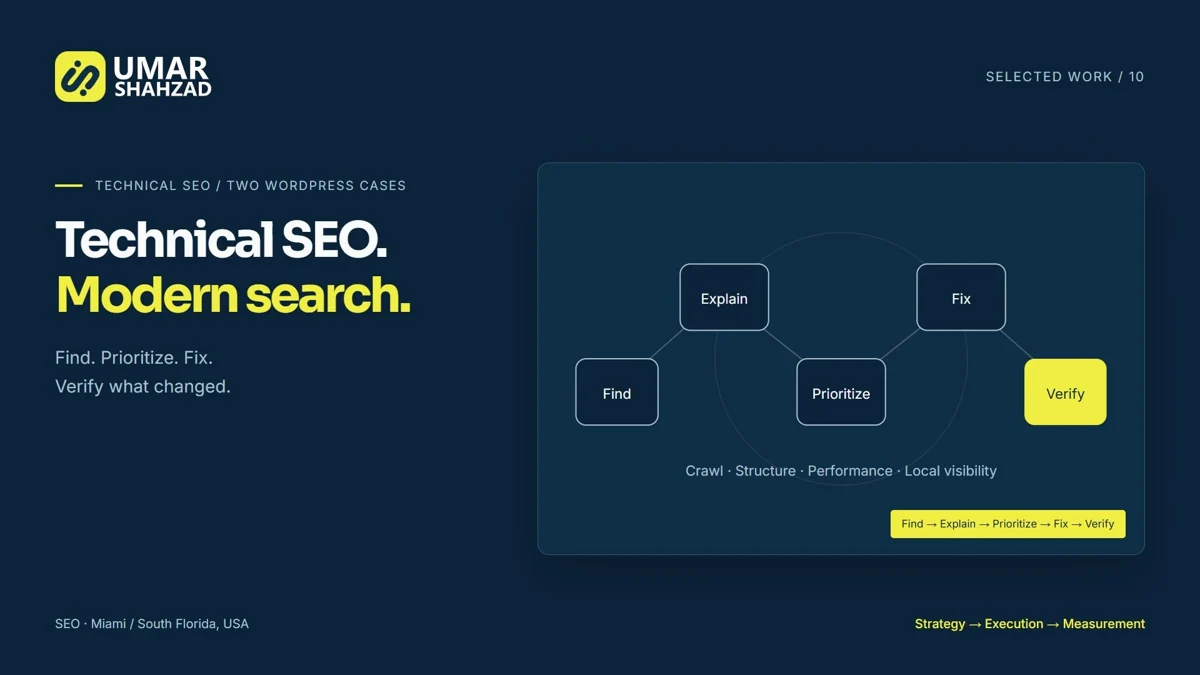
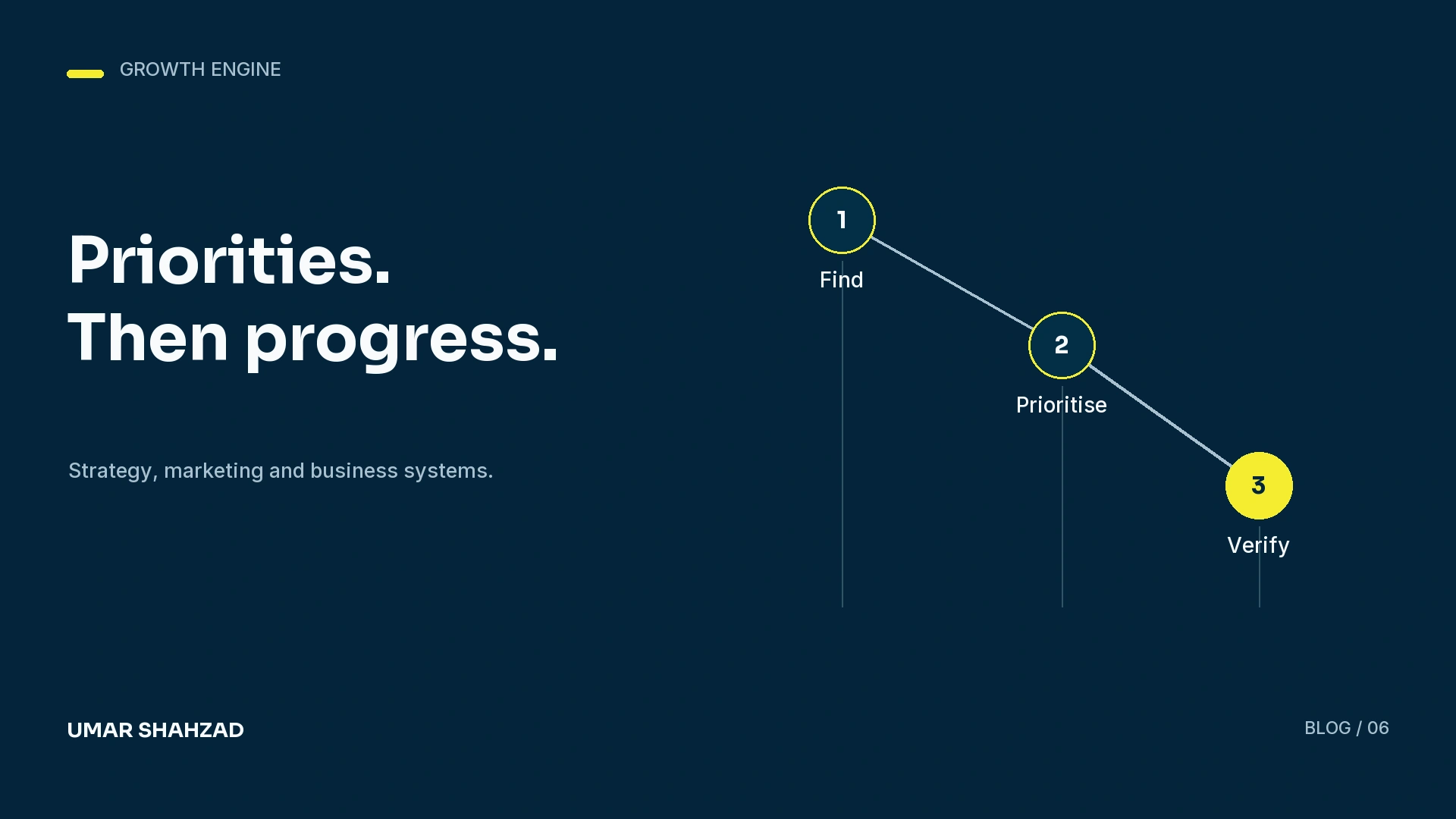
An SEO audit can contain hundreds of warnings and still leave a business unsure what to do next. A useful audit identifies which problems affect important pages, explains why they matter and turns the findings into an implementation order the team can follow.
I assess technical work alongside service relevance, site structure and customer journeys. A technically accessible page still needs to explain something valuable to the visitor.
Start with the pages that matter commercially
Identify the main services, markets and conversion paths. Review whether these pages can be discovered, crawled and indexed, and whether they communicate the intended service clearly. Google’s SEO Starter Guide provides the foundation for this review.
Use Search Console, site navigation and a crawl together. A crawler’s finding is a starting point for investigation, not an automatic instruction to change every URL. Check the actual page, its purpose and whether the issue affects the relevant content.
Separate blockers from improvements
An accidental noindex instruction on a key service page deserves a different priority from a minor metadata inconsistency. Broken internal links, inaccessible content and incorrect canonical signals can affect discovery or interpretation. Performance and content improvements need their own assessment of impact and effort.
- Blocking issue: a page intended for search cannot be accessed or indexed as expected.
- Structural issue: the page is hard to find, duplicated or poorly connected internally.
- Content issue: the page does not explain the service or answer the relevant search need.
- Experience issue: the visitor struggles to read, navigate or complete an action.
Make each recommendation specific
State the affected URL or template, the finding, the proposed change and the acceptance check. Assign an owner and note dependencies. “Improve speed” is difficult to implement; “resize the hero image and verify the mobile layout after replacement” gives the developer a defined task.
Group template-level fixes so the team can solve a recurring problem once. Keep page-specific recommendations separate where the content or service requirement differs.
Verify the change after implementation
Recheck the rendered page, relevant signals and the affected user journey. A deployed change is not complete until the intended behaviour is confirmed. For indexing changes, monitor Search Console over time rather than expecting an immediate response.
Maintain a change log with the implementation date. If visibility changes later, the team can review it alongside content changes, campaigns and broader search conditions. This supports a better explanation than assigning every movement to the latest technical fix.
Keep AI search within a sound SEO foundation
Google’s AI features guidance states that existing SEO best practices remain relevant and that no special markup or AI text file is required for those features. Use readable content, clear internal links and accurate structured data where appropriate.
AI mentions, citations, search clicks and enquiries answer different questions. Track them separately. A citation can indicate visibility without proving that a customer visited or bought.
Prioritise a practical first phase
Resolve the most consequential access and indexing problems, improve key service pages and establish a verification routine. Then work through performance, structure and content priorities based on the site’s needs.
The technical SEO case study shows this approach across two service businesses. For local discovery, continue with the local SEO priorities for a service business.